
Lake Gaston Boating Rules: What Buyers and New Owners Should Know
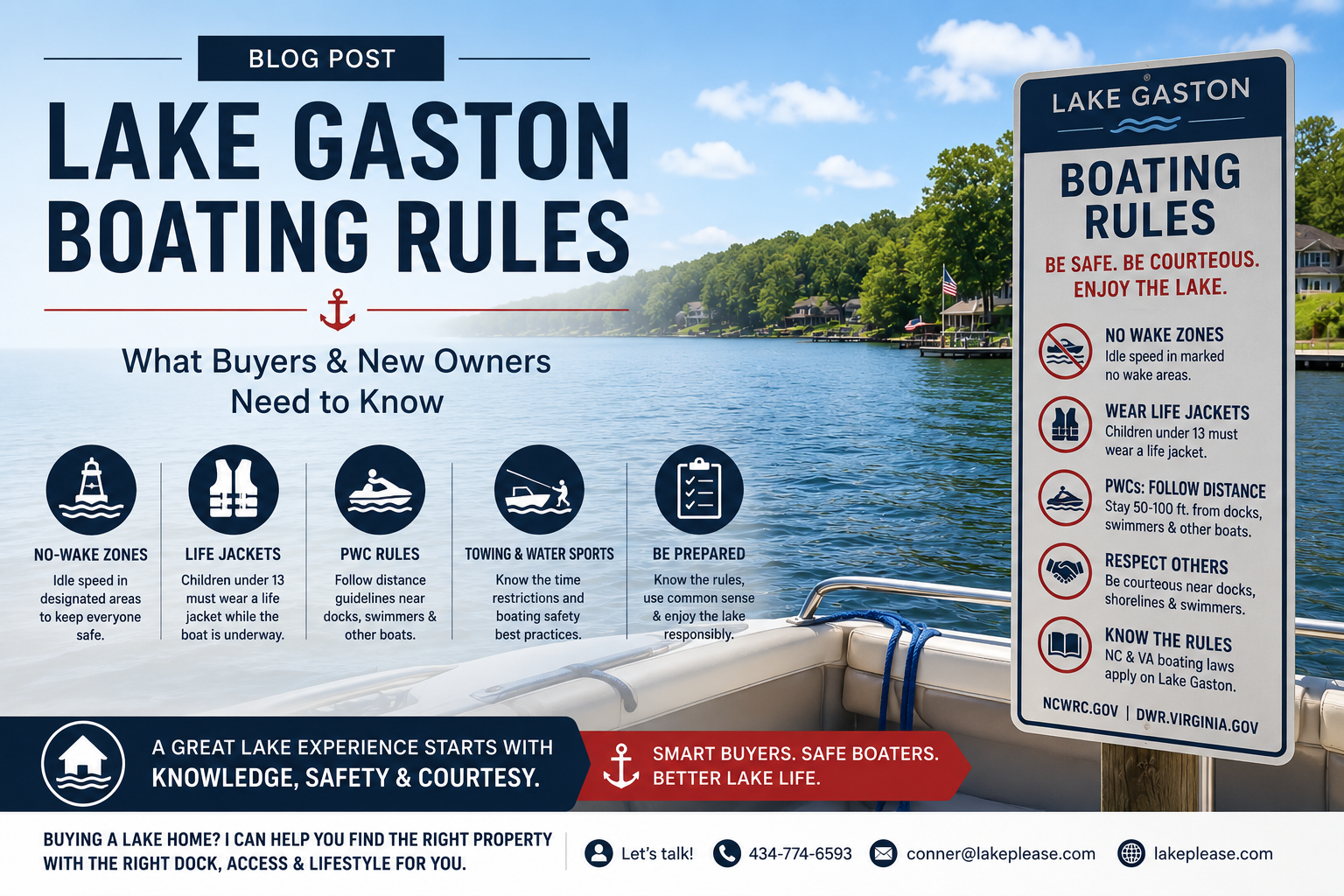
Boating is one of the biggest reasons people buy on Lake Gaston. Whether you want a pontoon, wake boat, fishing boat, jet ski, kayak, or family cruiser, the lake lifestyle is a major part of the appeal.
But before buying a waterfront home, vacation property, or lake-access home, it helps to understand the basics of boating rules and water safety.
Lake Gaston crosses both North Carolina and Virginia, so boaters should pay attention to state rules, local no-wake zones, safety requirements, and common-sense courtesy around docks, bridges, marinas, swimmers, and other boaters. North Carolina Wildlife Resources Commission and Virginia DWR both publish boating safety and equipment guidance, and Lake Gaston-specific safety groups also provide reminders for no-wake zones and safe operation.
This guide is not a substitute for official boating laws or a boater safety course. Instead, it is a practical overview for buyers and new owners who want to understand how boating rules can affect daily life on Lake Gaston.
If you are still comparing properties, you may also want to read my guides on how deep the water needs to be for your boat on Lake Gaston, Lake Gaston dock permits, and waterfront vs. off-water homes on Lake Gaston.
Why Boating Rules Matter When Buying a Lake Home
Boating rules are not just about avoiding tickets. They affect how you use the property.
When buying a Lake Gaston home, boating rules can influence:
- Dock use
- No-wake areas
- Jet ski use
- Wake boat activity
- Swimming safety
- Guest rules
- Rental potential
- Liability
- Insurance
- Property enjoyment
- Resale appeal
A quiet cove with limited wake may be perfect for one buyer. A main-lake property with quick access to open water may be better for another. A home near a bridge, marina, or no-wake zone may feel different from a home in a wide-open boating area.
The more you understand how the lake works, the better you can choose the right property.
No-Wake Zones on Lake Gaston
No-wake zones are areas where vessels must operate slowly enough to create no appreciable wake. North Carolina Wildlife describes a no-wake zone as an area where vessels are required to travel at idling speed, creating no appreciable wake.
Lake Gaston also has local no-wake areas. The Lake Gaston Water Safety Council notes that vessels in no-wake zones must travel at idling speed and create no appreciable wake, including the no-wake zone at Eaton Ferry Bridge.
No-wake areas matter because they can affect:
- How quickly you can leave a cove
- How calm the water feels near a dock
- Dock and shoreline protection
- Safety around swimmers
- Marina access
- Bridge and narrow-channel navigation
For some buyers, being near a no-wake area is a benefit because it can mean calmer water. For others, it may feel inconvenient if they want faster access to open boating.
Bridges, Marinas, Docks, and Swimmers
Boaters should be especially careful around bridges, marinas, docks, swimmers, anchored boats, and other congested areas.
The Lake Gaston Water Safety Council’s safety guidance says to maintain no-wake idle speeds at bridges and culverts with no-wake buoys, near stopped enforcement officers, and near swimmers, skiers down, anchored vessels, docks, and marina areas.
This is important for buyers because a property near a bridge, marina, or narrow cove may have different boating conditions than a property on a wider section of the lake.
Before buying, think about:
- Is the dock in a busy boating area?
- Are there swimmers nearby?
- Is the property near a marina?
- Is there a bridge or narrow passage nearby?
- Is the cove calm or heavily trafficked?
- Do boats frequently create wake near the dock?
- Would guests or renters understand the rules?
A great lake home should match the way you want to use the water.
Life Jacket Rules
Life jackets are one of the most important boating safety basics.
North Carolina law requires children younger than 13 to wear an appropriate life vest whenever they are on a recreational vessel that is underway. North Carolina also requires anyone riding a personal watercraft or being towed by one to wear an appropriate life vest.
Virginia DWR states that under federal life jacket rules, children under 13 on recreational vessels must wear an appropriate U.S. Coast Guard-approved life jacket unless they are below deck or in an enclosed cabin.
For Lake Gaston owners, the practical takeaway is simple: have properly fitted life jackets readily available, understand the rules for children and personal watercraft, and make safety part of the lake routine.
This is especially important if your home will be used by family, guests, or renters.
Personal Watercraft and Jet Skis
Jet skis and personal watercraft can be fun, but they come with specific safety concerns.
Virginia DWR says PWC operators must maintain no-wake operation when within 50 feet or less of docks, piers, boathouses, boat ramps, people in the water, and vessels other than PWCs. Virginia DWR defines no wake as the slowest possible speed required to maintain steerage and headway.
The Lake Gaston Water Safety Council’s guidance also notes that PWCs should not be operated within 50 feet in Virginia and 100 feet in North Carolina of docks, shorelines, other vessels, or swimmers.
For buyers, PWC activity can affect how a property feels. A quiet cove may feel very different from an area with frequent jet ski traffic. If you plan to use PWCs, consider whether the dock, lift setup, cove, and access are practical.
Towing, Tubing, Wakeboarding, and Skiing
Towing activities like tubing, wakeboarding, skiing, and kneeboarding are popular on Lake Gaston, but they require visibility, space, and safe operation.
Lake Gaston Guide notes that water-skiing, kneeboarding, towed floats, and wakeboarding are allowed between one-half hour before sunrise and one-half hour after sunset in Virginia, and one hour before sunrise and one hour after sunset in North Carolina.
If tubing, wakeboarding, or skiing is part of your plan, consider whether the property gives you practical access to areas where those activities are safe and appropriate.
A narrow cove may be great for quiet water but not ideal for large wakes. A main-lake location may provide easier access to open water but may also see more traffic and wave action.
Wake Boats and Shoreline Courtesy
Wake boats are popular, but they can create large wakes. That makes courtesy important around docks, shorelines, swimmers, kayaks, paddleboards, and other boaters.
Even when you are outside a no-wake zone, it is smart to think about where your wake is going. Large wakes can affect docks, boats tied up at piers, shoreline areas, and people in smaller craft.
When buying a Lake Gaston home, think about:
- Is the dock exposed to heavy wake?
- Is the shoreline protected?
- Are there frequent wake boats nearby?
- Is the cove wide enough for safe wake activity?
- Would you prefer calmer water?
- Is the property better suited for cruising, fishing, paddling, or wake sports?
This can influence both enjoyment and long-term property fit.
Night Boating
Night boating requires more caution.
Buyers should think about navigation lights, shoreline lighting, dock visibility, channel markers, traffic, weather, and whether they are comfortable operating after dark.
If you plan to boat at night, ask:
- Is the dock easy to identify from the water?
- Are there safe lights at the dock?
- Is the route back from the main channel easy to navigate?
- Are there shallow areas nearby?
- Are there stumps, rocks, or hazards?
- Is the cove confusing after dark?
A property that is easy to use during the day may feel different at night.
Boating Rules and Vacation Rentals
If you plan to rent your Lake Gaston home, boating rules become even more important.
Guests may not know the lake, the cove, the dock, or the safety expectations. If the home includes access to a dock, lift, kayak, paddleboard, or boat slip, owners should think carefully about rules, signage, instructions, and insurance.
Rental owners should consider:
- Clear dock rules
- Life jacket availability
- Swimming rules
- PWC restrictions
- No-wake reminders
- Boat lift instructions
- Guest boat docking rules
- Night boating cautions
- Emergency contact information
- Insurance coverage
If you are buying with rental income in mind, read my guide on whether you can Airbnb a Lake Gaston home.
Choosing a Lake Gaston Property Based on Boating Style
Different buyers need different water.
If you want calm water
Look for protected coves, lower-traffic areas, and properties with less exposure to main-lake wake.
If you want quick boating access
Look for properties with good dock depth, easy cove navigation, and convenient access to open water or the main channel.
If you want wake sports
Look for access to wider areas where towing and wake activity are safer and more practical.
If you want fishing
Consider cove access, creek areas, boat storage, launch convenience, and proximity to the parts of the lake you want to fish.
If you want kayaking or paddleboarding
A calmer cove may be more valuable than main-lake exposure.
For a deeper look at dock and water usability, read my guide on how deep the water needs to be for your boat on Lake Gaston.
NC Side vs. VA Side Boating Considerations
Because Lake Gaston crosses both North Carolina and Virginia, buyers should pay attention to which rules apply where they are boating and where their property is located.
This can matter for:
- Boater education
- Life jacket requirements
- Personal watercraft rules
- Towing times
- Enforcement
- Registration and equipment
- Local no-wake areas
If you are comparing properties on both sides of the lake, read my guide on Lake Gaston NC vs. VA side.
When in doubt, check official state boating resources and follow the stricter/safest approach.
What Buyers Should Ask Before Buying
Before buying a Lake Gaston home, ask:
- What kind of boating do I want to do?
- Is the dock deep enough for my boat?
- Can I safely reach the main channel?
- Is the property near a no-wake zone?
- Is the cove calm or busy?
- Are there swimmers or paddlers nearby?
- Is the dock protected from wake?
- Are there nearby marinas or boat ramps?
- Can I store or lift my boat here?
- Are there HOA rules for docks, slips, or boat trailers?
- Would guests or renters use the water safely?
- Does the property fit my boating lifestyle?
A home may look perfect from the road but feel completely different from the water.
Common Mistakes New Lake Gaston Owners Make
Ignoring no-wake zones
No-wake areas protect people, docks, boats, and shoreline. They also affect how a property feels.
Buying before understanding water access
Dock depth, cove access, and route to the channel matter.
Assuming guests know the rules
Guests and renters need clear instructions.
Forgetting about life jackets
Have properly fitted life jackets for children, adults, and PWC users.
Choosing the wrong cove for your boating style
A calm cove, busy cove, and main-lake location can all provide very different experiences.
Overlooking dock safety
Lighting, ladders, boards, lifts, and electrical service all matter.
Frequently Asked Questions About Lake Gaston Boating Rules
Are there no-wake zones on Lake Gaston?
Yes. No-wake zones require boats to operate at idling speed with no appreciable wake. The Lake Gaston Water Safety Council notes no-wake requirements in designated areas, including the Eaton Ferry Bridge no-wake zone.
Do children need life jackets on Lake Gaston?
Yes. North Carolina requires children younger than 13 to wear an appropriate life vest when on a recreational vessel that is underway. Virginia DWR also notes federal life jacket requirements for children under 13 on recreational vessels, with limited exceptions.
Are jet skis allowed on Lake Gaston?
Yes, personal watercraft are commonly used on Lake Gaston, but operators must follow safety, life jacket, distance, and no-wake rules. Virginia DWR and Lake Gaston Water Safety Council guidance both emphasize no-wake operation near docks, swimmers, and other vessels.
Can you wakeboard or tube on Lake Gaston?
Yes, towing activities like wakeboarding, tubing, kneeboarding, and skiing are common, but boaters should follow state rules, time restrictions, visibility requirements, and safe operation practices.
Does boating traffic affect home value?
It can. Some buyers prefer calm coves with less traffic, while others want quick access to open water. Boating conditions, wake exposure, dock protection, and water depth can all affect buyer appeal.
Should I buy in a cove or on the main lake?
It depends on your boating style. Coves may offer calmer water and privacy. Main-lake locations may offer stronger views and quicker access to open water but can have more wake and traffic.
What should I know before renting a Lake Gaston home with boat access?
You should review insurance, dock safety, guest instructions, life jackets, no-wake rules, HOA restrictions, and whether guests are allowed to use docks, slips, ramps, or community amenities.
Thinking About Buying or Selling on Lake Gaston?
If you are buying a Lake Gaston home and want to understand boating rules, water depth, dock setup, cove access, and how the property will actually function from the water, I can help you compare options before you make an offer.
If you are selling a Lake Gaston home, I can also help you market the features buyers care about most, including dock setup, boating access, water depth, shoreline condition, and lake lifestyle.
You can reach me directly at conner@lakeplease.com or call/text me at 434-774-6593.
You can also search Lake Gaston homes for sale, request a Lake Gaston home valuation, or contact me here.
Categories
Recent Posts