Lake Gaston Waterfront Home Inspection Checklist
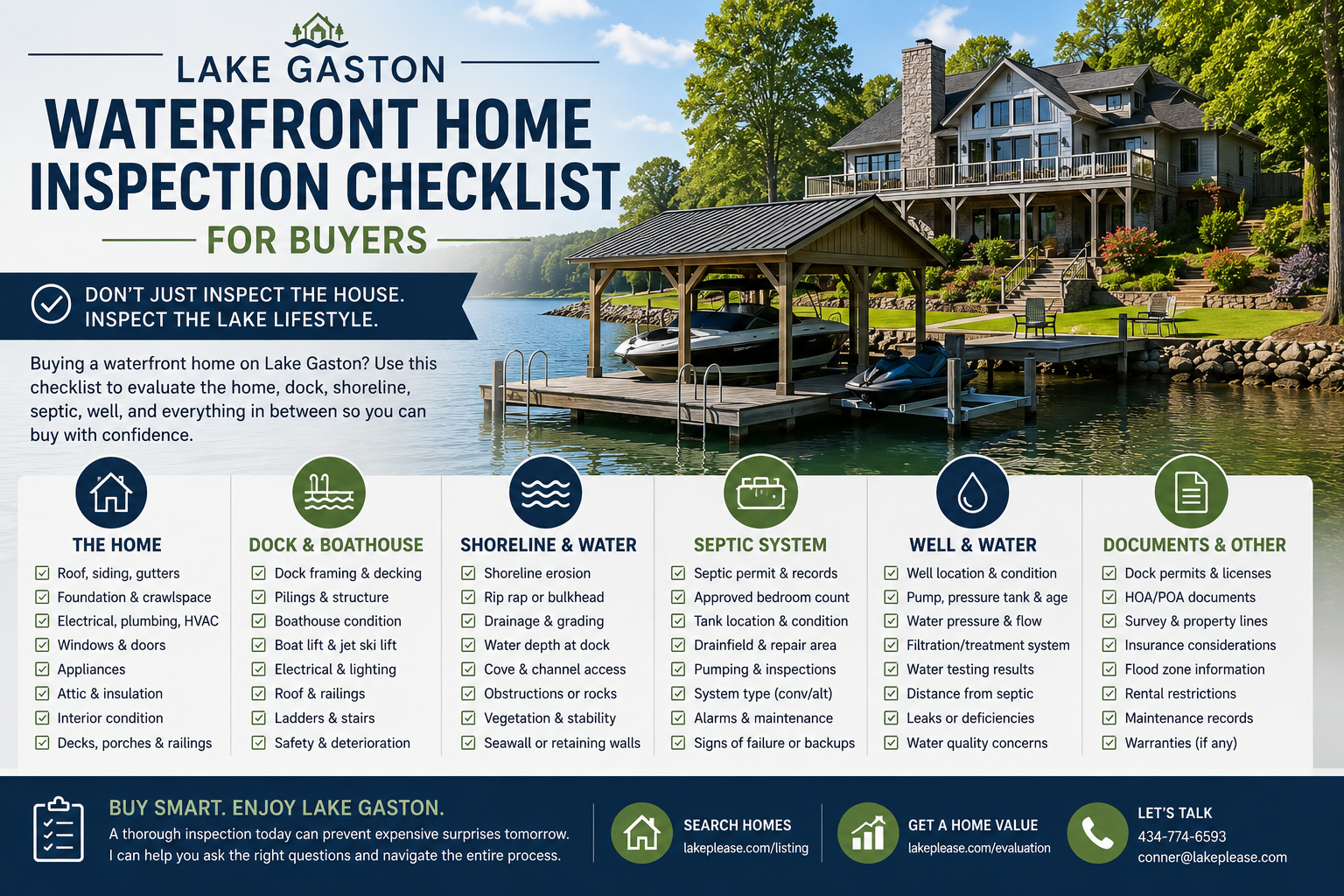
Buying a waterfront home on Lake Gaston is different from buying a standard home in a neighborhood.
You are not just inspecting the house. You are also evaluating the dock, boathouse, shoreline, water depth, septic system, well, crawlspace, decks, drainage, permits, HOA rules, and how the property functions as a lake home.
That does not mean you should be scared to buy waterfront property. It just means your due diligence needs to be more detailed.
A beautiful Lake Gaston home can look perfect online, but buyers need to know what is happening beneath the house, under the dock, along the shoreline, and behind the listing description. The more you understand before closing, the better decision you can make.
If you are still early in your search, you may also want to read my guides on waterfront vs. off-water homes on Lake Gaston, Lake Gaston dock permits, and the Lake Gaston well and septic guide for buyers.
Here is a practical inspection checklist for Lake Gaston waterfront buyers.
Why Waterfront Inspections Are Different
A normal home inspection focuses mainly on the structure, roof, systems, plumbing, electrical, appliances, attic, crawlspace, and interior condition.
A Lake Gaston waterfront inspection should go further.
You also need to think about:
- Dock condition
- Boathouse condition
- Shoreline stability
- Water depth
- Boat lift condition
- Jet ski lift condition
- Shoreline permits
- Septic system condition
- Well water and water quality
- Crawlspace moisture
- Drainage toward the lake
- Decks, stairs, and railings
- Outdoor electrical systems
- HOA and lake-use rules
- Insurance considerations
- Long-term maintenance costs
The goal is not to find a perfect home. The goal is to understand what you are buying before your due diligence period ends.
Start With a General Home Inspection
The first step is still a general home inspection.
A qualified home inspector should evaluate the main house, including:
- Roof
- Foundation
- Crawlspace or basement
- Attic
- Plumbing
- Electrical
- HVAC
- Water heater
- Appliances
- Windows and doors
- Siding
- Decks and railings
- Interior condition
- Safety concerns
For lake homes, pay especially close attention to moisture. Waterfront homes can have crawlspace humidity, drainage issues, wood rot, pest activity, deck deterioration, or exterior wear from sun, water, and seasonal use.
If the home is older, has been used seasonally, or has been rented, the inspection may be even more important.
Inspect the Dock and Boathouse
For many Lake Gaston buyers, the dock and boathouse are a major part of the property’s value.
Do not treat them as an afterthought.
Ask about:
- Dock framing
- Deck boards
- Pilings
- Roof structure
- Boathouse condition
- Boat lift operation
- Jet ski lift operation
- Electrical service
- Lighting
- Ladders
- Railings
- Stairs
- Loose boards
- Storm damage
- Rot or deterioration
- Safety issues
A dock may look good from the yard but still need repairs. A boat lift may be present but not functional. A boathouse may need roofing, electrical, structural, or safety work.
If the dock or boathouse is important to your purchase, consider having it reviewed by someone familiar with waterfront structures.
Also verify whether the dock and boathouse are properly documented. Dominion Energy provides shoreline permitting resources for Lake Gaston and Roanoke Rapids Lake, including information related to license transfers, new construction, modifications, rip rap, dredging, and vegetation work.
Review Dock Permits and Shoreline Paperwork
A dock is not just a physical structure. It also has a paperwork side.
Before buying, ask:
- Is the dock permitted or licensed?
- Is the boathouse included in the documentation?
- Does the structure match available drawings or photos?
- Has the license transfer process been addressed?
- Were any modifications approved?
- Is rip rap or shoreline work documented?
- Are there any open issues?
- Does the HOA also require approval?
Dock paperwork can affect buyer confidence, resale value, and future improvements.
For a deeper look at this issue, read my guide on Lake Gaston dock permits.
Check Water Depth and Boat Access
Water depth is one of the biggest concerns for waterfront buyers.
You should look beyond the view and ask whether the property works for your specific boat and lake use.
Important questions include:
- How deep is the water at the dock?
- How deep is the water under the boat lift?
- Can your boat safely leave the dock?
- Is the cove navigable?
- Are there shallow spots nearby?
- Are there rocks, stumps, or obstructions?
- Can you get to the main channel or deeper water?
- Is the dock usable for the boat you own or plan to buy?
A property does not need to have deep water everywhere to be useful. What matters is whether your boat can safely use the dock and reach navigable water.
For more detail, read my guide on how deep the water needs to be for your boat on Lake Gaston.
Inspect the Shoreline
Shoreline condition can affect both enjoyment and long-term maintenance.
Look for:
- Erosion
- Failing rip rap
- Bulkhead or retaining wall issues
- Undermined banks
- Drainage running toward the lake
- Steep or unsafe access
- Overgrown vegetation
- Areas that may need stabilization
- Storm damage
- Exposed roots
- Unsafe steps or walkways
Dominion Energy’s Lake Gaston shoreline permitting information includes resources for rip rap, dredging, vegetation manipulation, and other shoreline work, so buyers should not assume future shoreline changes can be made without review.
A stable, well-maintained shoreline can be a major positive. A neglected shoreline can become an expensive project.
Review the Septic System
Many Lake Gaston homes use septic systems. This is one of the most important parts of waterfront due diligence.
Ask for:
- Septic permit
- Approved bedroom count
- Tank location
- Drainfield location
- Repair area location
- Pumping records
- Inspection records
- Type of system
- Any repairs or replacements
- Whether the system is conventional or alternative
The approved septic bedroom count matters. A home may have extra sleeping areas, bonus rooms, or basement space, but the septic permit may support fewer bedrooms than the layout suggests.
The EPA generally recommends that septic systems be inspected every 1 to 3 years and pumped every 3 to 5 years, depending on tank size, household use, and other factors. More complex alternative systems may need more frequent inspections.
For more detail, read the Lake Gaston well and septic guide for buyers.
Review the Well or Water Source
Some Lake Gaston homes use private wells. Others may have county water or community water.
If the home has a private well, buyers should evaluate:
- Well location
- Wellhead condition
- Water pressure
- Pump condition
- Pressure tank
- Filtration or treatment systems
- Water testing
- Flow rate
- Age of components
- Any known water-quality issues
North Carolina public health guidance recommends annual testing for total and fecal coliform bacteria for private wells, along with periodic testing for other contaminants. Virginia Department of Health guidance also recommends annual testing for bacteria and nitrate in private wells.
If the property will be used by family, guests, renters, or full-time residents, water quality is not something to skip.
Crawlspace, Moisture, and Drainage
Crawlspace issues are common enough that Lake Gaston buyers should pay close attention.
Look for:
- Standing water
- High humidity
- Mold-like growth
- Wood rot
- Pest activity
- Insulation issues
- Vapor barrier problems
- Foundation cracks
- Poor grading
- Downspout issues
- Drainage toward the house
- Musty smells
Waterfront homes can have more moisture exposure than inland homes. A crawlspace that is damp, poorly ventilated, or improperly managed can lead to repairs after closing.
If the general home inspector flags moisture concerns, consider further evaluation.
Decks, Porches, Stairs, and Railings
Lake homes often have large outdoor living areas, and buyers should inspect them carefully.
Check:
- Deck framing
- Deck boards
- Railings
- Stairs to the water
- Screened porches
- Balconies
- Ledger boards
- Fasteners
- Rot
- Structural movement
- Safety concerns
- Code-related issues
Outdoor spaces are a huge part of the Lake Gaston lifestyle, but they also take a lot of wear from sun, rain, humidity, and heavy use.
A beautiful deck can be a major selling point. A failing deck can become a major expense.
Electrical Systems Near the Water
Electrical safety matters around docks, boathouses, lifts, exterior lighting, and shoreline areas.
Ask:
- Is there power at the dock?
- Was it installed properly?
- Are outlets protected?
- Are lights functioning?
- Is wiring protected from weather?
- Does the boat lift operate correctly?
- Are there any exposed wires?
- Has a licensed electrician reviewed waterfront electrical work?
Electrical systems near water should be taken seriously. If something looks questionable, ask for a professional evaluation.
Roof, Siding, Windows, and Exterior Wear
Lake homes can experience exterior wear from humidity, storms, sun, tree cover, and seasonal use.
Check:
- Roof age
- Missing shingles
- Gutter condition
- Siding condition
- Paint or stain
- Window seals
- Door condition
- Trim rot
- Tree overhang
- Drainage around the foundation
- Exterior caulking
A waterfront home may have strong views and great lake access, but deferred exterior maintenance can still affect value and negotiation.
HVAC, Plumbing, and Seasonal Use
Some Lake Gaston homes are used full time. Others are used seasonally.
Seasonal use can affect systems differently. A home that sits empty for long stretches may have plumbing, HVAC, pest, humidity, or maintenance issues that do not show up immediately in photos.
Ask:
- How often is the home used?
- Is it winterized?
- How old is the HVAC?
- Are there multiple systems?
- Are there mini-splits?
- Is there propane?
- Is there a fireplace?
- Has plumbing been updated?
- Are there leaks or past water issues?
- Are utilities adequate for year-round living?
If you plan to use the home as a vacation rental, system reliability becomes even more important.
HOA, POA, and Community Documents
Some Lake Gaston homes are located in communities with HOAs or POAs.
Review:
- Covenants
- Bylaws
- Rules and regulations
- Architectural guidelines
- Rental restrictions
- Dock rules
- Boat slip rules
- Amenity access
- Road maintenance
- Fees
- Special assessments
- Short-term rental rules
If the property is water-access rather than waterfront, verify exactly what lake access comes with the home.
Does the property include a boat slip? Is there a waitlist? Can guests use the amenities? Is there trailer parking? Are rentals allowed?
Do not assume. Verify.
Insurance and Flood Considerations
Before your due diligence period ends, get insurance quotes.
Lake homes may have different insurance considerations because of:
- Waterfront exposure
- Dock or boathouse structures
- Rental use
- Flood zone considerations
- Distance from fire services
- Age of the home
- Roof age
- Prior claims
- Detached structures
Even if flood insurance is not required by a lender, buyers should still evaluate drainage, shoreline conditions, low-lying areas, basements, and crawlspaces.
If you plan to rent the property, tell your insurance agent that upfront.
Rental and Guest-Use Concerns
If you plan to use the home as an Airbnb or VRBO, inspections should also consider guest use.
Ask:
- Is the dock safe for guests?
- Are railings secure?
- Are stairs manageable?
- Is parking adequate?
- Is internet reliable?
- Is the septic system sized appropriately?
- Are there enough bathrooms?
- Are there HOA rental restrictions?
- Is the home durable enough for guest use?
- Are there safety concerns around water access?
A home that works for personal use may not automatically work as a short-term rental.
For more detail, read my guide on whether you can Airbnb a Lake Gaston home.
Lake Gaston Waterfront Home Inspection Checklist
Before closing on a waterfront home, buyers should review:
- General home inspection
- Roof condition
- Foundation and crawlspace
- Moisture and drainage
- HVAC systems
- Plumbing
- Electrical
- Decks and railings
- Dock condition
- Boathouse condition
- Boat lift condition
- Shoreline condition
- Rip rap or erosion
- Water depth
- Boat access
- Septic permit
- Septic inspection
- Well inspection
- Water test
- HOA documents
- Dock permits
- Insurance quotes
- Flood considerations
- Rental restrictions
- Survey, if needed
- Repair estimates
The point is not to scare buyers away. The point is to make sure you know what you are buying.
Frequently Asked Questions About Lake Gaston Waterfront Home Inspections
Do I need a special inspection for a Lake Gaston waterfront home?
You should start with a general home inspection, but waterfront buyers may also need septic, well, dock, boathouse, shoreline, crawlspace, roof, HVAC, and drainage evaluations depending on the property.
Should I inspect the dock before buying?
Yes. The dock, boathouse, boat lift, electrical service, and shoreline access can all affect value and safety. If the dock is important to your purchase, it should be reviewed during due diligence.
Should I get a septic inspection before buying a Lake Gaston home?
Yes. Many Lake Gaston homes use septic systems, and the approved bedroom count, system condition, tank location, drainfield, repair area, and maintenance history can all affect value and future use.
Should I test private well water?
Yes. If the home uses a private well, water testing is a smart part of due diligence. North Carolina and Virginia public health resources recommend routine private well testing, especially for bacteria and nitrate.
Does water depth matter during inspection?
Yes. Buyers should evaluate whether the dock and route to deeper water work for the boat they own or plan to buy. Water depth can affect usability and resale value.
What are the biggest red flags when buying a Lake Gaston waterfront home?
Major red flags include septic problems, dock permit issues, unsafe boathouse condition, shoreline erosion, crawlspace moisture, poor drainage, shallow water that limits boat access, and unclear HOA or rental rules.
Can inspection issues affect negotiations?
Yes. Inspection findings may affect repair requests, credits, pricing, or whether the buyer moves forward. The key is understanding which issues are minor and which ones are expensive or deal-changing.
Thinking About Buying or Selling on Lake Gaston?
If you are buying a Lake Gaston waterfront home, I can help you look beyond the listing photos and ask the right questions about inspections, docks, boathouses, septic, wells, water depth, shoreline condition, and long-term value.
If you are selling a Lake Gaston waterfront home, I can also help you prepare the property, organize important documentation, and explain the features buyers care about most.
You can reach me directly at conner@lakeplease.com or call/text me at 434-774-6593.
You can also search Lake Gaston homes for sale, request a Lake Gaston home valuation, or contact me here.
Categories
Recent Posts