Lake Gaston Well and Septic Guide for Buyers

If you are buying a home or lot around Lake Gaston, well and septic details can make or break the purchase.
Many Lake Gaston properties are not connected to public water and sewer. That means buyers may need to evaluate private wells, septic systems, soil conditions, bedroom count, repair areas, water quality, and long-term maintenance before closing.
This is especially important for waterfront homes, older lake houses, vacation rentals, and vacant lots. A home may look perfect online, but the septic system may limit the legal bedroom count. A lot may have a great view but poor soil. A private well may need testing, treatment, or repairs.
None of this means you should avoid Lake Gaston properties with wells or septic systems. Many homes use them successfully for years. But buyers need to understand what they are buying.
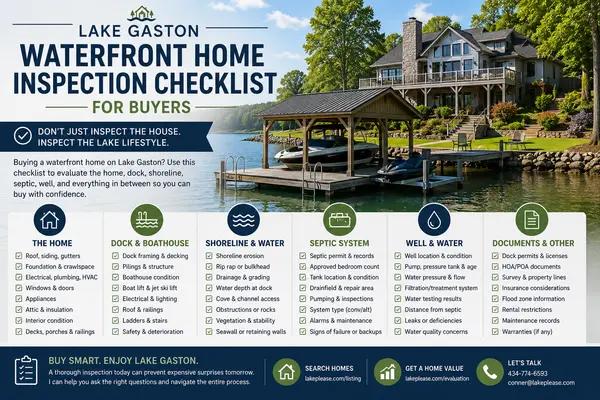
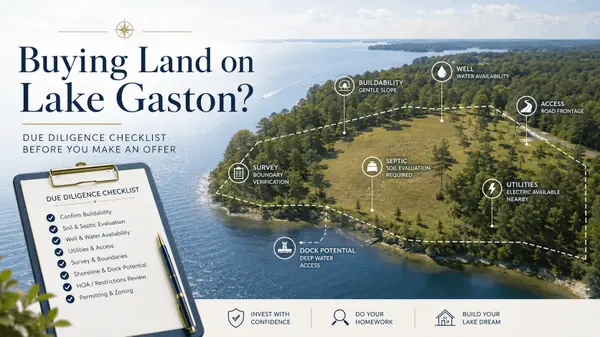
If you are comparing properties, you may also want to read my Lake Gaston waterfront home inspection checklist, my Lake Gaston land due diligence checklist, and my guide on whether you can build a dock on a Lake Gaston lot.
Why Wells and Septic Systems Matter at Lake Gaston
Well and septic systems affect more than utilities.
They can affect:
- Bedroom count
- Home value
- Rental potential
- Expansion options
- Renovation plans
- Financing
- Insurance
- Health and safety
- Maintenance costs
- Future resale
- Buyer confidence
A buyer who wants a four-bedroom vacation home needs to know whether the septic system supports that use. A buyer who plans to rent the home needs to know whether the water supply and septic system can handle guest use. A land buyer needs to know whether the soil can support a system at all.
This is why well and septic due diligence should happen early.
Septic Basics for Lake Gaston Buyers
A septic system treats and disposes of wastewater onsite. Instead of sending wastewater to a public sewer system, the home relies on a tank and drainfield or another approved system.
A basic septic system may include:
- Septic tank
- Distribution box
- Drainfield or dispersal area
- Soil treatment area
- Repair area
- Pipes
- Pumps, if applicable
- Controls or alarms, if applicable
Some properties use conventional systems. Others may use alternative or engineered systems, especially where soil, slope, rock, or space creates limitations.
The EPA states that average household septic systems should generally be inspected at least every three years and that septic tanks are typically pumped every three to five years. Alternative systems with pumps, float switches, or mechanical components generally require more frequent inspection.
For buyers, the key is not just whether the system exists. The key is whether it is properly permitted, functioning, and appropriate for the way you plan to use the property.
Septic Bedroom Count Is Critical
One of the most important septic questions is bedroom count.
A Lake Gaston home may have extra rooms, a basement, a loft, or a bonus room, but the septic system may only be approved for a certain number of bedrooms.
That matters because septic bedroom count can affect:
- How the home is marketed
- How many people the home can reasonably support
- Rental potential
- Resale value
- Renovation plans
- Future additions
- Buyer expectations
If a listing describes a home in a way that seems larger than the septic permit supports, buyers should ask questions.
Before making an offer, request the septic permit or county records showing the approved bedroom count.
What Septic Documents Should Buyers Request?
Before buying a Lake Gaston property with septic, ask for:
- Septic permit
- Approved bedroom count
- As-built drawing or site plan
- Tank location
- Drainfield location
- Repair area location
- Pumping records
- Inspection records
- Maintenance contract, if alternative system
- Repair history
- Any health department records
- Any known problems
If the seller does not have these documents, they may be available through the county health department or local records office.
Do not rely only on assumptions. Septic records can answer questions that photos cannot.
Septic Inspection Checklist
A septic inspection can help determine whether the system appears functional and whether there are obvious concerns.
During septic due diligence, buyers should evaluate:
- Tank condition
- Sludge level
- Signs of leakage
- Drainfield condition
- Standing water
- Slow drains
- Sewage odors
- Backups
- Pump operation
- Alarm function
- Distribution box, if accessible
- Repair area
- System type
- Maintenance history
The EPA notes that septic tank pumping frequency depends on factors like tank size, household size, water use habits, and solids accumulation.
A septic system may be working today but still need maintenance, repairs, or replacement planning.
The Repair Area Matters
A repair area is a reserved area that may be needed if the original drainfield fails.
Buyers should know where the repair area is located and whether it is protected.
This matters because a buyer should avoid placing improvements over the septic system or repair area, such as:
- Additions
- Garages
- Pools
- Patios
- Driveways
- Large sheds
- Heavy landscaping
- Parking areas
If you plan to expand the home, add a garage, build outdoor spaces, or change the driveway, septic location and repair area become very important.
Alternative or Engineered Septic Systems
Some Lake Gaston properties may use alternative septic systems because of soil, slope, rock, water table, space limitations, or other site constraints.
Alternative systems can work well, but they may require:
- More frequent inspections
- Maintenance contracts
- Pumps
- Controls
- Alarms
- Power
- Specialized service providers
- Higher repair costs
- More careful owner use
The EPA notes that alternative systems with electrical float switches, pumps, or mechanical components should generally be inspected more often than average household systems.
Before buying a property with an alternative septic system, understand how it works, what maintenance is required, and what it may cost to repair.
Septic Red Flags Buyers Should Watch For
Potential septic red flags include:
- No septic permit available
- Bedroom count mismatch
- Sewage smell
- Slow drains
- Wet areas over the drainfield
- Recent unexplained repairs
- No pumping records
- No maintenance records
- Drainfield located where future improvements are planned
- Alternative system with no service records
- Seller uncertainty about tank or drainfield location
- Evidence of heavy use beyond system capacity
A septic issue does not always mean you should walk away, but it does mean you need to understand the risk before closing.
Buying Vacant Land: Septic Comes First
For vacant land, septic feasibility should be one of the first due diligence items.
NC State Extension advises buyers to investigate soil and site conditions before purchasing land and to look for limitations that could affect septic performance.
Before buying land, ask:
- Has the lot been evaluated by a soil scientist?
- Does it have a valid septic approval?
- How many bedrooms are approved?
- Is the system conventional or alternative?
- Where would the system go?
- Where is the repair area?
- Does the slope create issues?
- Is the soil rocky?
- Is there enough usable area?
- Would a well location affect septic placement?
A lot with beautiful water views may not support the house you want if the septic does not work.
Private Well Basics for Lake Gaston Buyers
A private well provides water directly to the home. If the property has a private well, the owner is responsible for maintenance, testing, treatment, and repairs.
A well system may include:
- Well casing
- Wellhead
- Pump
- Pressure tank
- Electrical components
- Water line to the home
- Filtration or treatment system
- Water softener, if applicable
A private well can work very well, but buyers should evaluate both water quantity and water quality.
Well Inspection Checklist
Before buying a property with a private well, consider reviewing:
- Well location
- Wellhead condition
- Casing condition
- Pressure tank
- Pump age
- Water pressure
- Flow rate
- Visible leaks
- Filtration systems
- Water softener
- Electrical components
- Distance from septic components
- Well records
- Recent repairs
- Water quality test results
If the home has had intermittent use, ask whether the system has been maintained and whether water has been tested recently.
Water Testing
Water can look clear and still have contaminants.
North Carolina public health guidance recommends annual private well testing for total and fecal coliform bacteria, with additional periodic testing for heavy metals, nitrates, nitrites, lead, copper, pesticides, and volatile organic compounds.
Virginia Department of Health notes that bacteria and nitrate are exceptions where annual testing is recommended for private wells. VDH also recommends additional testing if the wellhead is flooded or if there is a noticeable change in water quality, taste, or appearance.
Before buying, water testing can help identify issues that may require treatment, filtration, repairs, or further evaluation.
Well and Septic Setbacks
Well and septic placement can affect each other.
A private well generally needs to be located a safe distance from septic tanks, drainfields, repair areas, and other potential contamination sources. Exact requirements can vary based on jurisdiction, system type, and site conditions.
Buyers should not try to guess setback compliance. Ask the county health department, licensed septic professional, well contractor, or other qualified professional to help verify.
This is especially important for vacant land, small lots, rocky lots, or properties where neighboring wells and septic systems may affect available space.
How Wells and Septic Affect Renovations
If you plan to renovate or expand a Lake Gaston home, wells and septic systems matter.
Before planning additions, ask:
- Is the septic system approved for the desired bedroom count?
- Can the septic system be expanded?
- Is there room for a larger system?
- Would an addition interfere with the drainfield or repair area?
- Would a new garage or driveway create conflicts?
- Is the well located where future improvements are planned?
- Will guest use or rental use increase system demand?
A renovation plan that looks simple on paper may be limited by septic capacity or site layout.
How Wells and Septic Affect Vacation Rentals
If you plan to use the property as a short-term rental, well and septic details become even more important.
Guests may use more water, take more showers, wash more laundry, and place more demand on systems than a typical owner-occupied home.
Before buying a rental property, ask:
- Is the septic capacity appropriate?
- Does the approved bedroom count match the rental plan?
- Is there enough water pressure?
- Has the well been tested recently?
- Are there filtration systems to maintain?
- Is the septic system conventional or alternative?
- Are there maintenance contracts?
- What happens if a pump or alarm fails during a guest stay?
For more rental due diligence, read my guide on whether you can Airbnb a Lake Gaston home.
NC Side vs. VA Side Considerations
Lake Gaston crosses both North Carolina and Virginia. Well, septic, health department, and county processes may vary depending on the exact property location.
Buyers looking around Littleton, Henrico, and Macon may be dealing with North Carolina county processes.
Buyers looking around Bracey, Gasburg, Ebony, Boydton, South Hill, Valentines, and La Crosse may be dealing with Virginia county processes.
For a broader comparison, read my guide on Lake Gaston NC vs. VA side.
Questions to Ask Before Making an Offer
Before making an offer on a Lake Gaston home or lot, ask:
- Is the property on septic or sewer?
- Is the septic permit available?
- How many bedrooms are approved?
- Where are the tank, drainfield, and repair area?
- When was the septic last pumped?
- Has the septic been inspected recently?
- Is the system conventional or alternative?
- Is there a maintenance contract?
- Is the property on private well or public water?
- Has the water been tested recently?
- What were the test results?
- Is there a filtration or treatment system?
- Are there any known well or septic issues?
- Would future renovations be limited?
- Would rental use create extra concerns?
These questions can help you avoid surprises after closing.
Frequently Asked Questions About Lake Gaston Wells and Septic Systems
Do most Lake Gaston homes have septic systems?
Many Lake Gaston homes use septic systems, though some properties may have access to public or community sewer. Buyers should verify the exact system for each property.
Why does septic bedroom count matter?
Septic bedroom count can affect how the home is marketed, how many people the system is designed to support, rental potential, renovation options, and resale value.
Should I get a septic inspection before buying?
Yes. A septic inspection can help identify system condition, maintenance needs, and potential red flags before closing.
How often should a septic system be pumped?
The EPA says septic tanks are typically pumped every 3 to 5 years, while inspection frequency depends on the system type and usage.
Should I test well water before buying?
Yes. Water testing is recommended when buying a property with a private well. North Carolina and Virginia public health resources recommend regular testing for bacteria and other contaminants.
Can I build a bigger house if the septic permit is only for two bedrooms?
Not necessarily. You would need to determine whether the septic system can be expanded or whether the lot can support a larger system. This should be verified before buying or renovating.
Are alternative septic systems bad?
No. Alternative systems can work well, but they may require more maintenance, inspections, service contracts, pumps, alarms, and specialized care.
Can well and septic issues affect resale value?
Yes. Unclear records, limited bedroom count, poor water quality, failing septic components, or lack of repair area can affect buyer confidence and resale value.
Thinking About Buying or Selling on Lake Gaston?
If you are buying a Lake Gaston home or lot, I can help you ask the right well and septic questions before you make an offer. These details can affect bedroom count, rental potential, renovation plans, financing, and long-term value.
If you are selling a Lake Gaston property, I can also help you organize septic, well, water testing, and maintenance information so buyers feel more confident about the property.
You can reach me directly at conner@lakeplease.com or call/text me at 434-774-6593.
You can also search Lake Gaston homes and land for sale, request a Lake Gaston property valuation, or contact me here.
Categories
Recent Posts