
Lake Gaston Land Due Diligence Checklist
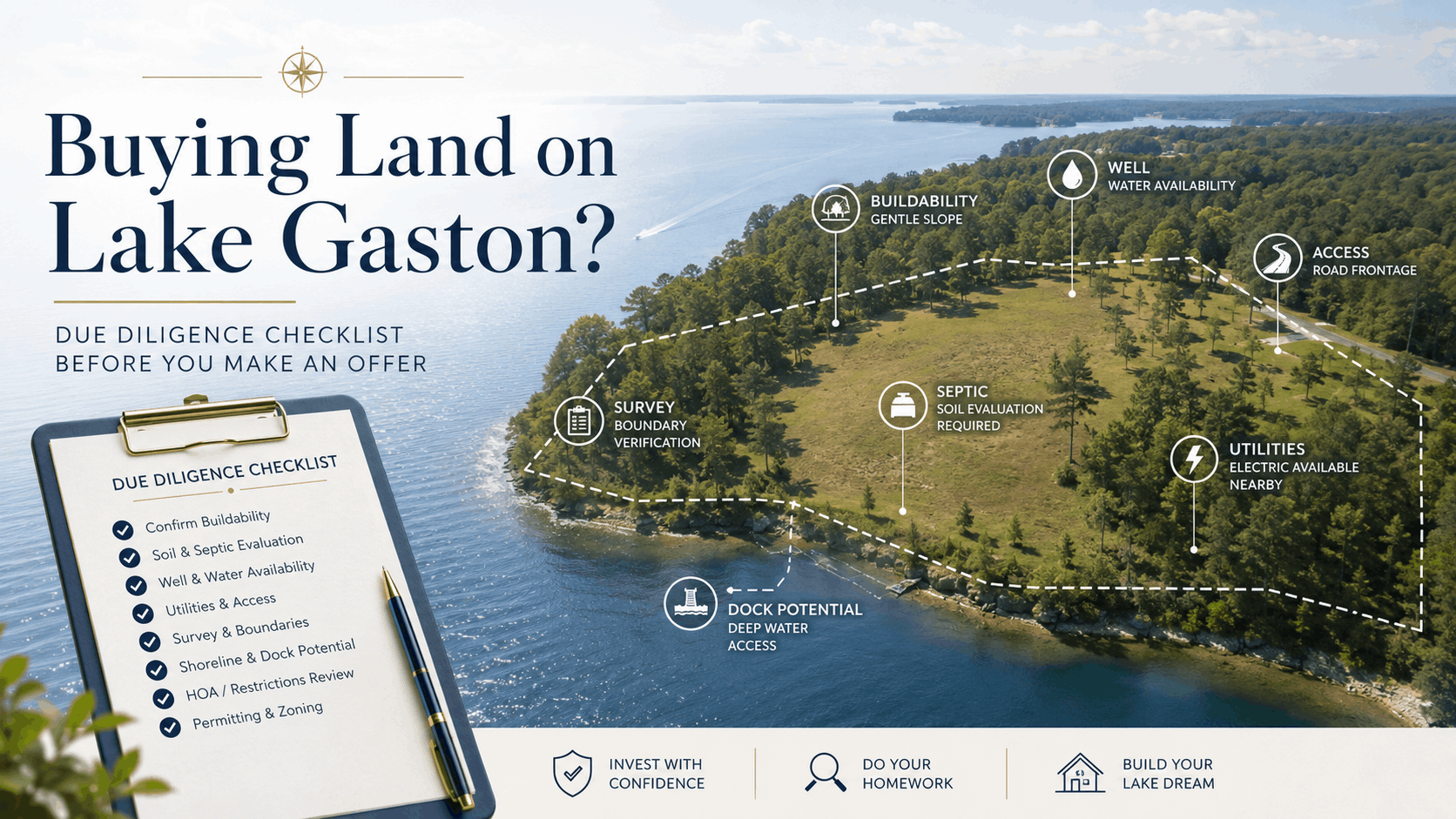
Buying land on Lake Gaston can be a great opportunity, but it is also one of the easiest ways for a buyer to make an expensive mistake.
A finished home has already answered many questions. It has a house, utilities, driveway, septic or sewer setup, water source, and an established use. Vacant land is different. With land, you are buying potential — and potential needs to be verified.
Before buying a Lake Gaston lot, you need to know whether it can support the home, dock, septic system, well, driveway, utilities, rental use, and lifestyle you have in mind.
This is especially important around Lake Gaston because buyers may be dealing with waterfront rules, Dominion Energy shoreline permitting, septic limitations, rocky soils, slope, HOA restrictions, access issues, and county requirements.
NC State Extension warns buyers to investigate soil and site conditions before purchasing land because not all soils are suitable for conventional septic systems.
This checklist is designed to help buyers slow down, ask better questions, and avoid assuming that a beautiful lot is automatically buildable.
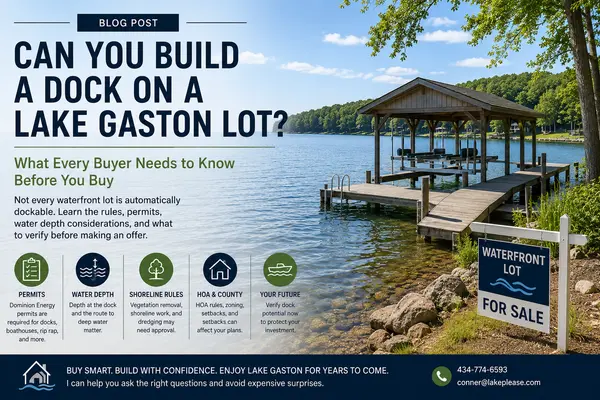
If you are considering a waterfront lot, you should also read my guide on whether you can build a dock on a Lake Gaston lot.
1. Confirm the Lot Is Actually Buildable
The first question is not whether the lot is pretty. The first question is whether it is buildable.
A buildable lot needs more than trees and road frontage. It needs a usable house site, legal access, septic or sewer feasibility, water source, setbacks, utility options, and compliance with zoning or HOA rules.
Before making an offer, ask:
- Is the lot legally buildable?
- What is the zoning?
- What are the setbacks?
- Is there enough space for the house?
- Is there enough space for septic?
- Is there enough space for a repair area?
- Is the slope manageable?
- Is there legal road access?
- Are there easements?
- Is the lot in a floodplain?
- Is a survey available?
- Are there HOA restrictions?
A lot may look usable online but become much more complicated once a soil scientist, surveyor, builder, or county official reviews it.
2. Verify Septic Feasibility
Septic is often the biggest issue with Lake Gaston land.
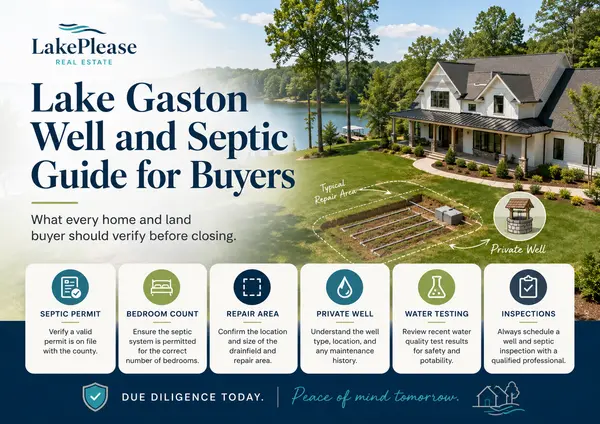
If public sewer is not available, the lot must support an onsite septic system. That means the soil, slope, rock, water table, setbacks, and available area all matter.
NC State Extension advises buyers to walk the lot and look for indications of soil problems or site limitations that could affect septic performance before investing.
Questions to ask include:
- Has the lot had a soil evaluation?
- Is there a perc test?
- Is there an approved septic permit?
- How many bedrooms are approved?
- Is the approval current?
- Is the system conventional or alternative?
- Where would the drainfield go?
- Where is the repair area?
- Is the soil rocky?
- Is there a high water table?
- Would the driveway or house site conflict with the septic area?
- Would a well location affect septic placement?
Do not assume you can build a three-bedroom or four-bedroom home just because the lot is large. Septic feasibility can control the size and value of the entire project.
3. Understand Bedroom Count
For land buyers, bedroom count is not just a floor plan decision. It is often a septic decision.
If the lot is only approved for a two-bedroom septic system, that can affect:
- Home size
- Layout
- Resale value
- Rental potential
- Financing
- Future additions
- Buyer pool
- Long-term use
A buyer who wants a large family lake house should verify septic capacity early. A lot that cannot support the intended bedroom count may still be useful, but it may not be the right property for that buyer.
If the listing says the lot has a prior perc test, ask for the actual paperwork. Do not rely only on marketing language.
4. Confirm the Water Source
Lake Gaston land may need a private well, county water, community water, or another water source.
Before buying, ask:
- Is county water available?
- Is there a tap fee?
- Is a private well needed?
- Where could the well be located?
- Are there setback conflicts with septic?
- Are neighboring wells nearby?
- Is there an existing well?
- Has water quality been tested?
- Would drilling be difficult due to rock?
- What would installation cost?
In Virginia, health department onsite sewage and water programs include applications for private well construction permits or certification letters, and the Virginia Department of Health notes that applications may require supporting work from a properly licensed private sector consultant.
Water and septic need to be evaluated together because one can affect the other.
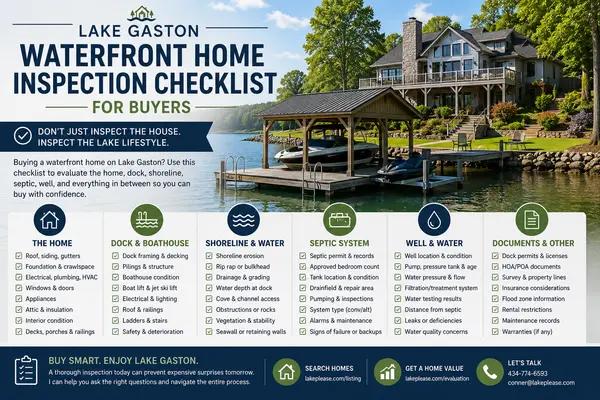
5. Review Dock and Shoreline Potential
For waterfront land, dock potential is one of the biggest due diligence items.
Dominion Energy provides shoreline permitting resources for Lake Gaston and Roanoke Rapids Lake, including requirements and fees for shoreline-related permits.
Before buying a waterfront lot, ask:
- Can a dock be built?
- Can a boathouse be built?
- Where could it be placed?
- Is the shoreline in a special management area?
- What is the water depth?
- Is the cove navigable?
- Is dredging needed?
- Is dredging allowed?
- Is rip rap needed?
- Are there vegetation restrictions?
- Are there HOA dock rules?
- Would neighboring docks affect placement?
- What would the dock cost?
For more detail, read my guide on building a dock on a Lake Gaston lot and my guide to Lake Gaston dock permits.
6. Check Water Depth and Boat Access
If you are buying waterfront land, water depth can affect how useful the lot will be.
You should evaluate:
- Depth at the shoreline
- Depth where the dock would be placed
- Depth under a future lift
- Route to deeper water
- Cove width
- Obstructions
- Seasonal conditions
- Boat type
- Whether the property works for your intended use
Some buyers do not need deep water because they mainly want views, kayaking, paddleboarding, or quiet water. Others need enough water for a pontoon, wake boat, fishing boat, or larger vessel.
The key is matching the lot to your boating lifestyle. For more detail, read my guide on how deep the water needs to be for your boat on Lake Gaston.
7. Get a Survey or Review the Existing One
A survey can help identify boundaries, easements, encroachments, road frontage, access, lot size, and other issues.
Before buying, ask:
- Is there a recent survey?
- Are corners marked?
- Is there legal access?
- Are there easements?
- Are there encroachments?
- Are there shared driveways?
- Does the deed match the listing?
- Is the shoreline boundary clear?
- Are setbacks shown?
- Are there utility easements?
A survey is especially important for waterfront land because small differences in boundaries, shoreline, slope, or access can change what can be built.
8. Review Access and Driveway Feasibility
A lot may have road frontage but still be difficult to build on.
Driveway issues can include:
- Steep slope
- Narrow road frontage
- Shared access
- Poor sight distance
- Culverts
- Drainage
- Gravel road maintenance
- Private road agreements
- Utility conflicts
- Tree removal
- Turnaround requirements
Before buying, ask a builder or contractor whether a driveway is practical and what it may cost.
A difficult driveway can create major construction and long-term maintenance challenges.
9. Confirm Utilities and Internet
Utilities are easy to overlook until they become expensive.
Before buying, verify:
- Electric availability
- Cost to extend power
- Water availability
- Sewer or septic requirements
- Internet availability
- Cell service
- Trash service
- Propane needs
- Utility easements
- Distance from existing service lines
Internet matters more than many buyers realize. A Lake Gaston home may be used for remote work, guests, rentals, or full-time living. Poor internet can affect enjoyment, resale, and rental appeal.
10. Review HOA, POA, and Deed Restrictions
Many Lake Gaston lots are in communities with HOA or POA rules.
Before buying, review:
- Declaration of covenants
- Bylaws
- Architectural guidelines
- Building minimums
- Rental rules
- Dock rules
- Boat trailer rules
- Road maintenance
- Amenity access
- Short-term rental restrictions
- Setbacks
- Exterior material rules
- Timeline to build
- Review fees
HOA rules can affect everything from house size to dock style to rental use. Do not assume a lot fits your plan until you read the documents.
11. Understand Zoning and County Requirements
Lake Gaston crosses multiple counties and two states, so zoning and county rules may vary by location.
Before buying, confirm:
- Zoning district
- Permitted uses
- Minimum lot size
- Building setbacks
- Short-term rental rules
- Accessory structure rules
- Manufactured home restrictions
- RV or camper rules
- Floodplain rules
- Building permit process
- Septic and well process
A local agent can help identify which county and jurisdiction you need to contact, but buyers should verify the exact rules that apply to the property.
12. Estimate Total Development Costs
The purchase price is only one part of the land cost.
Budget for:
- Survey
- Soil evaluation
- Septic permit
- Septic installation
- Well or water connection
- Driveway
- Clearing
- Grading
- Erosion control
- Utility extension
- Dock or boathouse
- Rip rap or shoreline work
- Design plans
- Engineering
- Building permits
- HOA approvals
- Builder deposits
- Unexpected site work
A cheap lot can become expensive if it needs major site work, alternative septic, long utility runs, or shoreline improvements.
13. Talk to the Right Professionals Early
Lake Gaston land due diligence may involve several professionals.
Depending on the property, you may need:
- Real estate agent
- Soil scientist
- Septic designer
- Surveyor
- Builder
- Dock contractor
- Dominion Energy
- County zoning office
- Health department
- Well contractor
- Excavator
- Insurance agent
- HOA or POA representative
The goal is not to overcomplicate the purchase. The goal is to avoid buying a lot that cannot support your plan.
14. Use Your Due Diligence Period Carefully
Due diligence is the time to investigate the property.
In North Carolina, the Real Estate Commission explains that due diligence can include many considerations such as inspections, septic inspections, survey, appraisal, title search, loan qualification, repair negotiations, and other matters that affect whether the buyer moves forward.
For land, due diligence should be even more intentional.
During due diligence, try to confirm:
- Buildability
- Septic feasibility
- Water source
- Dock potential
- Shoreline restrictions
- Survey and access
- HOA rules
- Utilities
- Zoning
- Estimated development costs
- Whether the lot fits your goals
Do not wait until the end of due diligence to start asking hard questions.
15. Common Mistakes Land Buyers Make
Falling in love with the view
Views are important, but buildability matters more.
Assuming the lot will perc
Never assume septic will work without documentation.
Ignoring dock feasibility
Waterfront land is not automatically dockable or suitable for every boat.
Not reviewing restrictions
HOA, deed, county, and Dominion rules can all affect the project.
Underestimating site costs
Driveways, clearing, grading, septic, wells, utilities, and shoreline work can add up quickly.
Skipping local guidance
Lake Gaston land is specialized. Buyers should not treat it like a standard residential lot.
Frequently Asked Questions About Buying Land on Lake Gaston
What should I check before buying land on Lake Gaston?
You should check buildability, septic feasibility, well or water access, dock potential, shoreline rules, water depth, survey, road access, utilities, HOA restrictions, zoning, and estimated development costs.
Is septic approval important for Lake Gaston land?
Yes. Septic approval can determine whether the lot can support the home size and bedroom count you want. NC State Extension notes that not all soils are suited for conventional systems and recommends thorough soil and site investigations before buying land.
Can every waterfront lot on Lake Gaston have a dock?
No. Dock potential depends on Dominion Energy requirements, shoreline conditions, water depth, HOA rules, lot layout, and other property-specific factors.
Do I need a survey before buying Lake Gaston land?
A survey is strongly recommended because it can identify boundaries, easements, access, encroachments, and other issues that affect buildability and value.
What professionals should I talk to before buying Lake Gaston land?
You may need a real estate agent, soil scientist, septic designer, surveyor, builder, dock contractor, well contractor, county official, health department, and HOA representative.
Can I use a Lake Gaston lot for a vacation rental?
Possibly, but you need to verify zoning, HOA rules, septic capacity, parking, insurance, local taxes, and whether the future home layout would work for guests.
Is buying Lake Gaston land risky?
It can be if buyers skip due diligence. The risk is much lower when buyers verify septic, buildability, dock potential, access, utilities, restrictions, and total development costs before closing.
Thinking About Buying or Selling Lake Gaston Land?
If you are thinking about buying land on Lake Gaston, I can help you understand the due diligence items that matter most: septic, wells, dock potential, shoreline rules, surveys, utilities, access, HOA restrictions, and buildability.
If you are selling a Lake Gaston lot, I can also help you explain the property’s strengths clearly so buyers understand the opportunity and feel more confident.
You can reach me directly at conner@lakeplease.com or call/text me at 434-774-6593.
You can also search Lake Gaston homes and land for sale, request a Lake Gaston property valuation, or contact me here.
Categories
Recent Posts